Games Like Sudoku – Best Logic Puzzles and Number Games to Try
Explore the best games like Sudoku, including Kakuro, KenKen, Killer Sudoku, Nonograms, Futoshiki, Wordoku, and other logic puzzles for focused play.
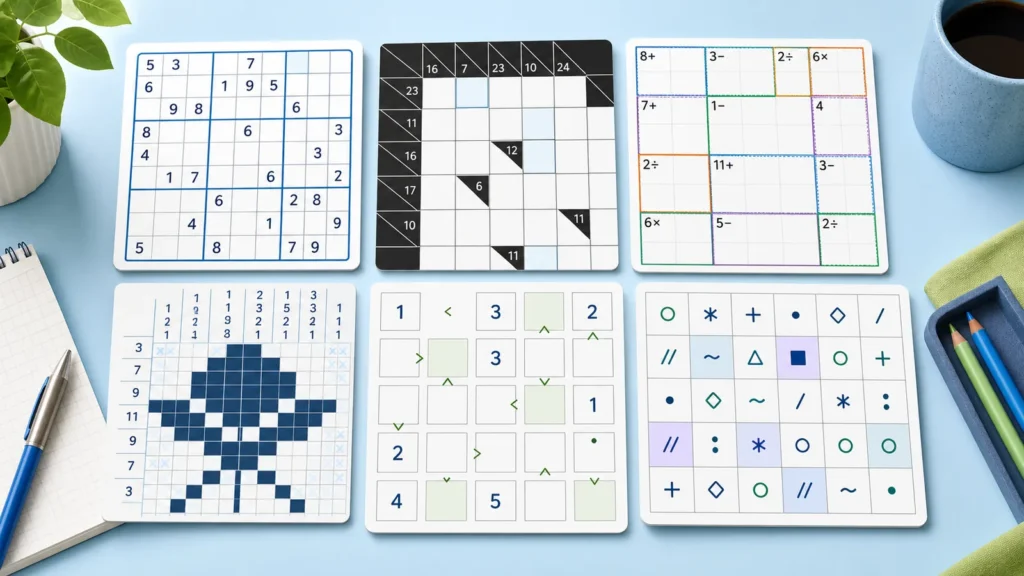
Move from the list into a playable logic puzzle
Compare Sudoku alternatives, then open a live grid when you want a focused challenge instead of another article.
Browse Solving Strategies →Games Like Sudoku: 11 Smart Puzzle Games to Try Next
If you like Sudoku but want something new, the best next step is not a random mobile game. It is another puzzle that gives you the same satisfying mix of logic, pattern recognition, and quiet focus.
This guide rounds up the best games like Sudoku for adults, beginners, and bored browsers who want a smarter way to pass time. Some of these puzzles feel close to classic Sudoku. Others scratch the same itch in a different way.
If you want the short version, start here:
- Want another number puzzle? Try Kakuro or KenKen.
- Want something visual? Try Nonograms.
- Want word-based logic? Try crosswords or cryptic crosswords.
- Want a calm daily habit? Stay with Sudoku and add a second puzzle type on the side.
What makes a game feel like Sudoku?
People usually search for games like Sudoku when they want one or more of these things:
- A puzzle you can play alone
- Clear rules with no luck involved
- A relaxing way to focus for 5 to 30 minutes
- That small “click” moment when the next move becomes obvious
- A better alternative to endless scrolling
That means the best Sudoku alternatives are not always number puzzles. They are puzzles with structured logic, low noise, and steady progress.
11 games like Sudoku worth trying
1. Kakuro
Kakuro is one of the closest games to Sudoku if you want another number puzzle. Instead of filling rows, columns, and boxes with digits 1 through 9, you fill runs of cells so they add up to clue totals without repeating numbers.
Why Sudoku fans like it: it still rewards elimination, note-taking, and clean logic. It feels familiar, but the arithmetic twist makes the solving flow different enough to stay fresh.
Best for: players who enjoy structured number deduction and do not mind quick mental math.
2. KenKen
KenKen looks a little like Sudoku, but each outlined group of cells has a target number and an operation such as addition, subtraction, multiplication, or division. You solve by combining Latin-square logic with cage rules.
Why Sudoku fans like it: the grid discipline feels familiar, but each cage creates a sharper constraint. Small breakthroughs can unlock the whole puzzle.
Best for: players who want a logic puzzle that feels compact, fast, and slightly more mathematical than Sudoku.
3. Nonograms
Nonograms, also called picross or griddlers, use number clues outside the grid to tell you how many cells to shade in each row and column. Solve enough lines correctly and a hidden picture appears.
Why Sudoku fans like it: the deduction is clean, the interface is calming, and the satisfaction curve is excellent. It is one of the best visual alternatives to Sudoku.
Best for: people who like logic but want less arithmetic and more pattern-building.
4. Crosswords
Crosswords are not number puzzles, but they match Sudoku surprisingly well as a daily ritual. You still scan the grid, fill partial answers, and use one solved area to unlock another.
Why Sudoku fans like it: both puzzles reward patience and pattern recall. The difference is that crosswords lean more on vocabulary and general knowledge than pure logic.
Best for: players who want a brain challenge with language instead of numbers.
5. Cryptic crosswords
If regular crosswords feel too trivia-heavy, cryptic crosswords may be a better fit. Each clue hides wordplay rules, so solving becomes more about decoding structure than remembering facts.
Why Sudoku fans like it: cryptics give the same “there must be a rule here” feeling that makes Sudoku satisfying.
Best for: puzzle fans who enjoy patterns, language, and slow-burn breakthroughs.
6. Hashi
Hashi, sometimes called Bridges, asks you to connect islands with one or two lines while following simple rules. The goal is a single connected network with no crossing bridges.
Why Sudoku fans like it: it is pure logic, low-clutter, and highly readable once you know the rules. Good Hashi puzzles create the same calm concentration as Sudoku.
Best for: people who want a quiet logic puzzle with almost no setup friction.
7. Slitherlink
Slitherlink gives you a grid with numbers in some squares. Your job is to draw one continuous loop around the grid while making each numbered square touch exactly that many sides of the loop.
Why Sudoku fans like it: every move is based on local logic, and you can often prove progress without guessing. It feels clean and methodical.
Best for: players who like line logic and visual deduction.
8. Futoshiki
Futoshiki is another grid puzzle often compared with Sudoku. You place numbers without repetition in rows and columns, but some cells also include greater-than or less-than signs to show relative size.
Why Sudoku fans like it: the rule set is simple, yet the inequality clues change the solving rhythm in interesting ways.
Best for: players who like Sudoku’s structure but want slightly different constraints.
9. Logic grid puzzles
These are the classic deduction puzzles where you match people, objects, times, or places using clues such as “Mia did not choose the red bag” or “The Tuesday meeting was not in Room B.”
Why Sudoku fans like it: they are all about narrowing possibilities until only one arrangement fits. If you enjoy careful elimination, this is one of the best directions to explore.
Best for: people who want a slower, clue-driven logic session.
10. Jigsaw puzzles
Jigsaws are not a direct logic match, but they do offer the same meditative focus and incremental progress. Many adults searching for games like Sudoku are really looking for a calm hobby, not only another grid puzzle.
Why Sudoku fans like it: both are quiet, solo-friendly, and easy to pick up for short sessions.
Best for: players who want something tactile and screen-free.
11. Sudoku variants
Sometimes the best game like Sudoku is still Sudoku, just with a twist. Mini Sudoku, Samurai Sudoku, Killer Sudoku, Thermo Sudoku, and Jigsaw Sudoku all keep the core appeal while changing the logic.
Why Sudoku fans like it: you keep the rules you already know while adding novelty. This is usually the easiest way to branch out without frustration.
Best for: anyone who likes classic Sudoku but feels ready for a fresh challenge.
Which puzzle should you try first?
If you are not sure where to start, use this quick guide:
- You like numbers and clean deduction: Kakuro, KenKen, or Futoshiki
- You like visual solving: Nonograms or Slitherlink
- You like clue-based reasoning: logic grid puzzles or cryptic crosswords
- You want a calm offline hobby: jigsaws or printable Sudoku
- You mainly want another daily habit: Sudoku variants
Why Sudoku is still one of the best daily puzzle habits
Even if you explore other puzzle games, Sudoku still has a few advantages that make it unusually easy to keep up:
- The rules are simple enough to remember forever
- You can play for 3 minutes or 30 minutes
- It works online, on paper, and on mobile
- Difficulty levels make progress easy to measure
- It fits boredom relief, focus training, and relaxing downtime equally well
If you are new to logic puzzles in general, Sudoku is still one of the best entry points. If you already play regularly, the best move is often to pair it with one other puzzle type instead of replacing it completely.
Good internal next steps if you like this kind of puzzle
If you want more puzzle ideas or a way to jump straight into a grid, these are good follow-ups:
- Puzzles to Play Online for Adults
- Puzzles to Play Online Free No Download
- Brain Games for Adults Online Free
- Printable Puzzles for Adults
- Fun Puzzles to Play When Bored
FAQ
What game is most similar to Sudoku?
Kakuro and KenKen are among the closest alternatives because they use numbers, deduction, and grid-based logic. Futoshiki is also a strong fit if you want a similar structure with different rules.
What should I play if I like Sudoku but get bored easily?
Try Nonograms or Slitherlink if you want a different visual experience without losing the logic feel. If you want a faster switch, try a Sudoku variant instead of leaving the format completely.
Are there word games like Sudoku?
Yes. Crosswords and cryptic crosswords appeal to many Sudoku fans because they reward pattern recognition and structured thinking, even though they use language instead of numbers.
Are games like Sudoku good for quick boredom relief?
Yes. Most of these puzzles work well in short sessions and do not require a long tutorial, which makes them useful when you want something more satisfying than scrolling for a few minutes.
What if I still prefer classic Sudoku?
That is a good answer too. Classic Sudoku remains one of the easiest puzzle habits to keep because it is flexible, replayable, and simple to return to every day.
Conclusion
The best games like Sudoku are the ones that preserve the feeling you actually enjoy. For some people, that means another number puzzle like Kakuro or KenKen. For others, it means a quieter visual puzzle like Nonograms or Slitherlink. And for many players, the real answer is just a wider puzzle rotation anchored by Sudoku.
If you want a simple place to start, play a fresh Sudoku puzzle, try the daily Sudoku, or browse more online puzzle ideas for adults on the blog.
Best games like Sudoku for logic-first players
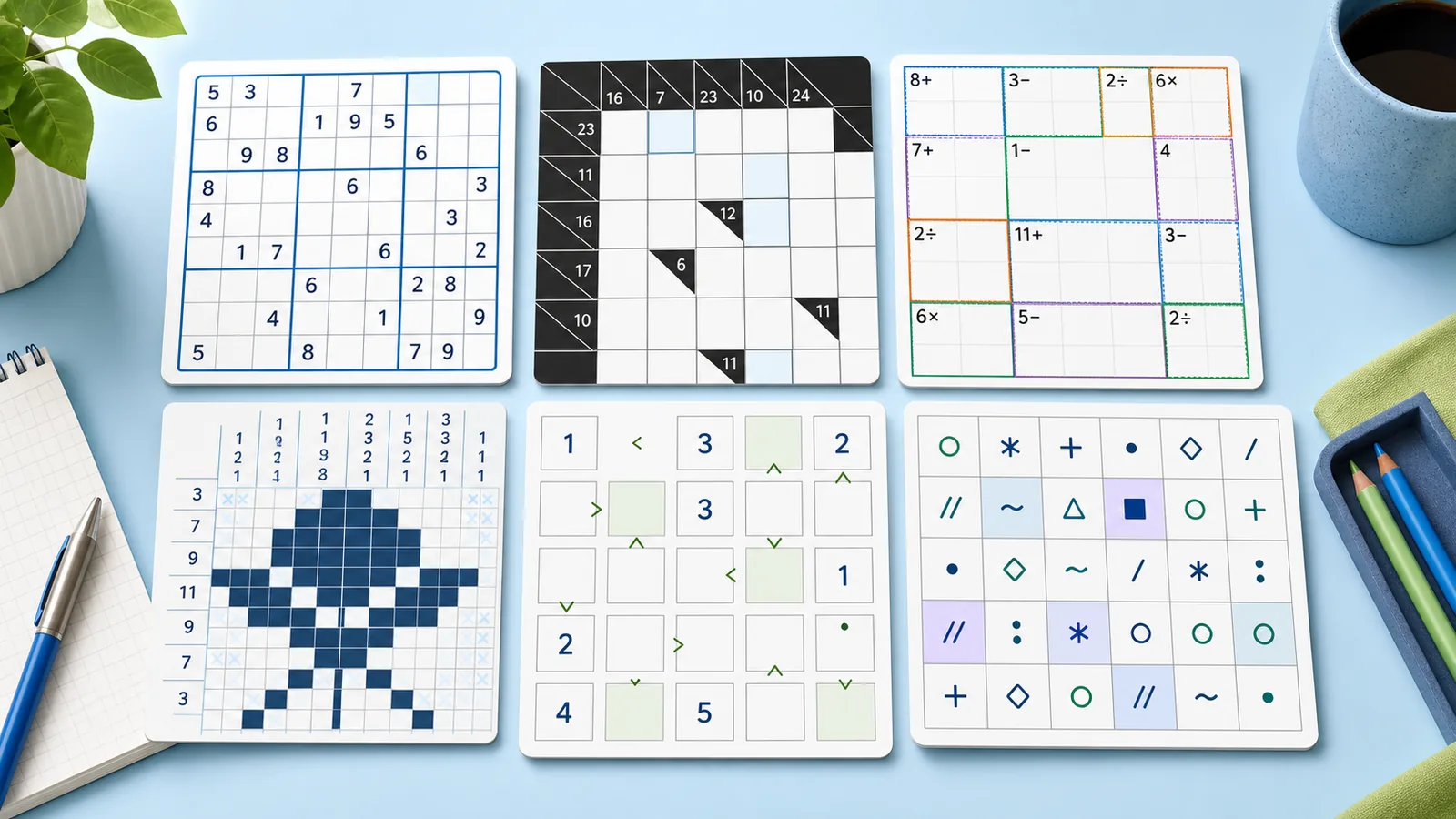
If you like Sudoku, prioritize games with clear constraints, visible progress, and repeatable deduction. The best adjacent options are Kakuro, Killer Sudoku, KenKen, Nonograms, Futoshiki, Wordoku, and block-style grid puzzles.
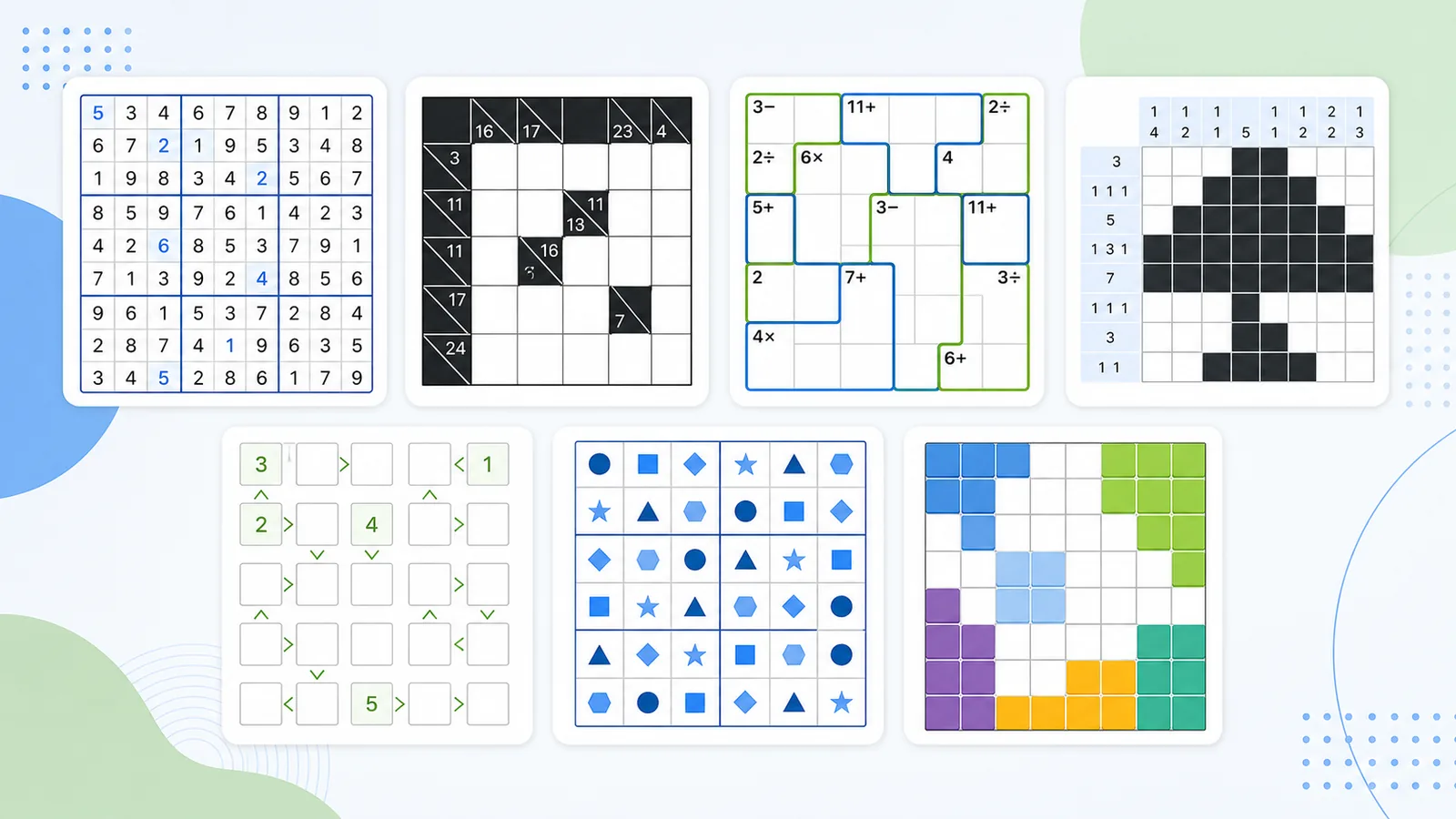
| Game | Why Sudoku players like it | Best for |
|---|---|---|
| Kakuro | Crossword-like number sums | Arithmetic logic |
| Killer Sudoku | Classic Sudoku plus cage totals | Deeper deduction |
| KenKen | Operations and cages | Math puzzle variety |
| Nonograms | Row and column clues | Visual deduction |
| Futoshiki | Inequality clues | Fast compact logic |
| Wordoku | Sudoku placement with symbols | A familiar twist |
Next routes: try classic online Sudoku, explore printable Sudoku puzzles, or play daily Sudoku together.
Get a better Sudoku habit in your inbox
A quick daily puzzle reminder, streak motivation, and the occasional useful PS News update.